
Kinesiology Taping (what, why, who & when)
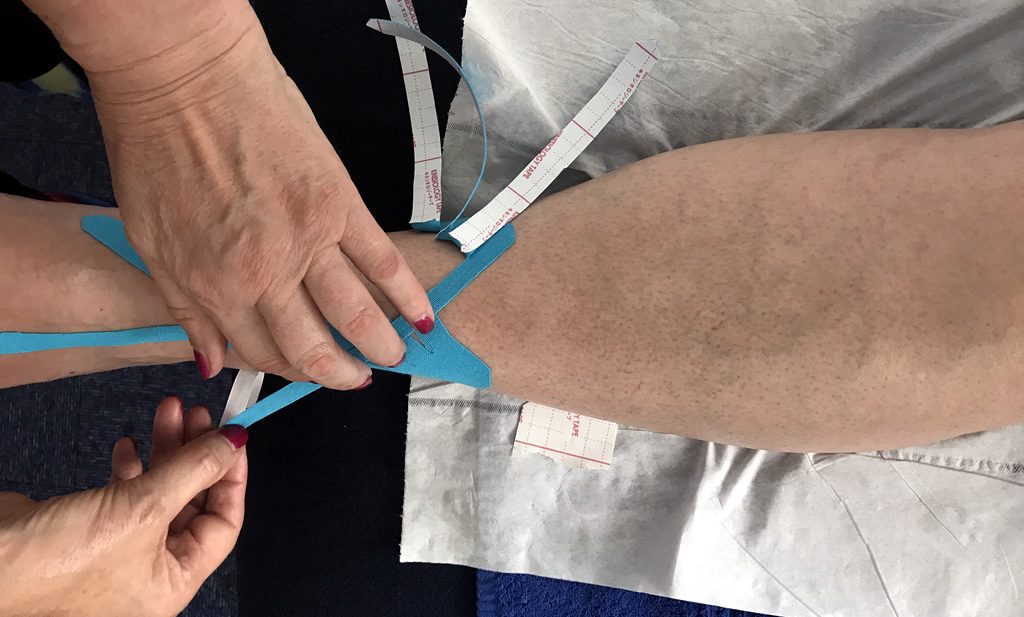
What is Kinesiology Tape?
Kinesiology Taping has been more than 30 years in development, with research papers still been written as to its effectiveness & appropriate application. Founded by Dr Kenzo Kase as assistance for clients between his Chiropractor treatment sessions, it has been widely seen at sporting events for athletes requiring accelerated healing, pain reduction & improvements in muscle / joint function.
The tape itself mimics the properties of human skin in its texture & weight. It is breathable, latex free & hypoallergenic, made from 100% cotton fibres & elastic fibres & is pharmaceutically free.
A vast array of colours & patterns are available although initially blue & pink were utilised as according to the principles of “Colour Therapy,” blue has a more calming & settling effect on the body, with red/pink being associated with activation & stimulation. When tennis players wanted use Kinesiology Tape at Wimbledon, the strict dress code of white was enforced so the “neutral” beige & black colours were introduced.
The colour of the tape however has absolutely NO impact upon its performance. The BIG difference is the quality of the tape being applied. Cheap tapes were also seen to be false economy. Often the adhesive was too weak, therefore not lasting for any significant time & requiring frequent re-application. On the contrary, the adhesive can also be too strong leading to skin irritation. The weave was of a poor construction leading to fraying & puckering when attempting to stretch the tape for application. If the tape is too elastic it is ineffective, insufficiently elastic tape leads to a loss of movement with the muscle working against the tape rather than enhancing movement quality.
2 particular brands of Kinesiology tape uphold all the necessary standards to permit effective & successful application – ROCKTAPE & TIGER K TAPE. Weald Fit & Therapy will only utilise one of these two tested & recommended products.
Why use Kinesiology Tape?
Kinesiology tape can be utilised in short-term injury management as it lifts the skin away from the underlying fascia, thus taking the pressure off dilated blood & lymph vessels that lie above the inflamed muscle & helping to decompress sensory nerves which are sending pain messages to the brain via the Central Nervous System.
It can be used for long-term rehabilitation purposes & postural correction, by specific taping methods to stimulate underactive muscles, relax damaged or overactive muscles & reduce oedema (swelling) where relevant, thus re-educating the body’s neural network.
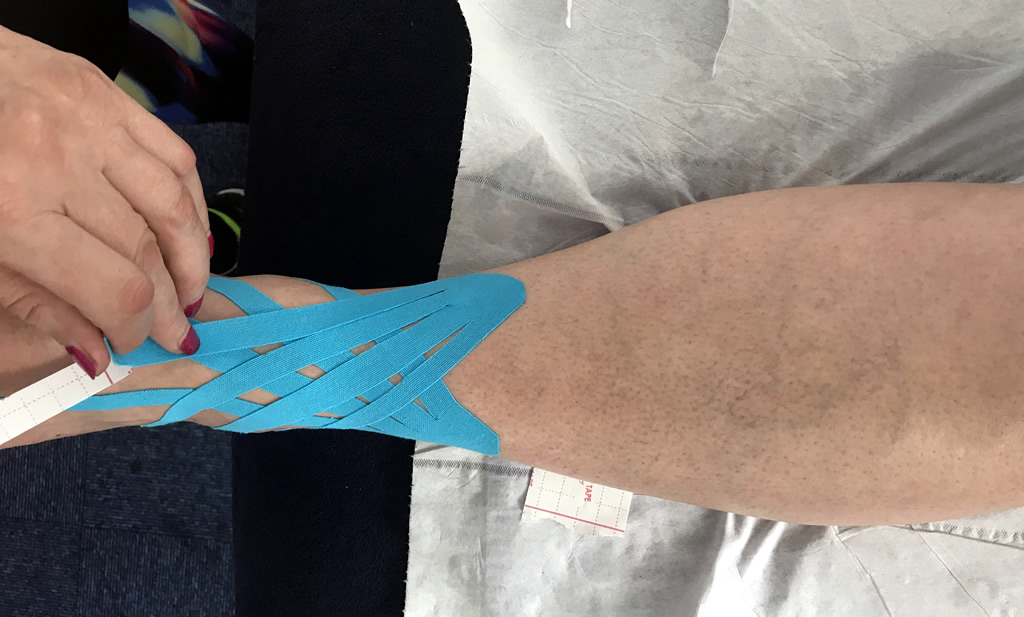
Who can benefit from Kinesiology Taping?
Well that’s easy to answer – almost anybody who has injured themselves or has a chronic painful condition. Kinesiology tape can be applied regardless of age & level of fitness (with a few exceptions).
When can it be applied?
Unlike conventional taping, Kinesiology Tape can be applied IMMEDIATELY following an injury to assist in draining areas of inflammation, such as swelling associated with a sprained ankle. Latterly the tape can be used to support the joint & muscles in their healing while allowing controlled movement. This dual approach will assist in speeding recovery.
An appointment can be made for taping in isolation but is usually as part of a treatment plan, being applied at the end of the session. If appropriate & practical, the client may be shown how to correctly apply the tape to achieve the desired effects.
K-Taping Testimonial
“I recently took part in the South Downs Way in a day bike ride. In preparation for the event I have been having deep tissue sports massage with Wendy, this is where I found out about Kinesiology taping. In previous years doing the event I have suffered with extreme cramp in my upper legs. Whilst discussing this with Wendy she suggested giving the taping ago. After explaining to me what it can do I thought “what’ve I got to lose”. On the day of the event my left leg was taped up with me still wondering how it will perform. After about 45 miles my legs felt fine, however the very edge of the tape started to peel off slightly. It was one of the hottest days of the year and the constant cycle motion and sweating created this slight lift in the tape. 50 miles in still no cramp where the tape was. 60 miles in no cramp but I was getting very fatigued and irritable. Instead of waiting to my next check point and trimming the edges of the tape that had started to peel off as instructed by Wendy I ripped it off in temper. 63 miles CRAMP ! I completed the ride albeit in a element of discomfort. Conclusion. For me the tape worked, I never had any issues with my thighs in fact it probably gave me the bonus of a psychological boast that I felt good and confident wearing it. Physically my leg performed well with tape applied . Would I use it again ? YES, but if it started to peel id trim the edges as instructed.”
Steve

