
Hippocrates had a point!
Massage has been employed by physicians & therapists for literally centuries to assist & enhance the wellbeing of elite athletes & mere mortals alike. There is evidence of massage as a health-promoting treatment in China as far back as 2500BC, with the traditional Indian “Ayurvedic” medicine advising diet, exercise & massage from around 1800BC. Additionally there are scenes depicting hands on treatments illustrated on walls of the Pyramids in Egypt.
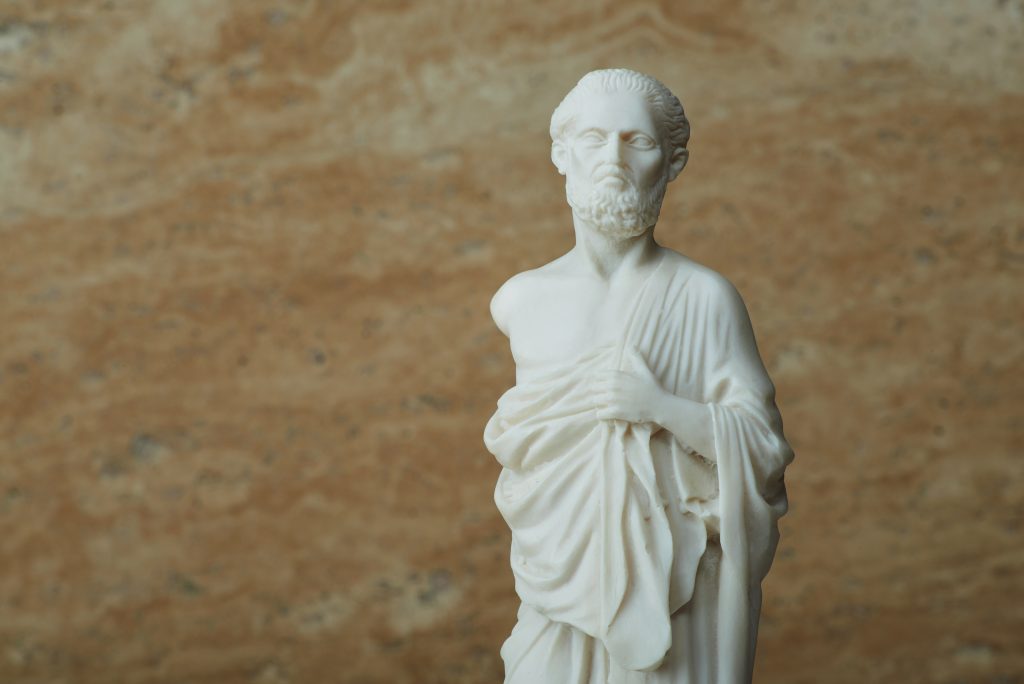
The words “Massage” and “Therapy” are both Greek in origin, with Hippocrates (460 – 377 BC) writing on the benefits of various therapeutic activities including exercise, massage & traction from his school of learning on the Island of Kos. Five centuries later, Galen, another Greek physician built upon the Hippocratic principles of health & wellbeing, writing extensively on the subject but more importantly, his discoveries relating to Anatomy & Physiology of the human body was a basis for medicine for centuries to follow.
Fast forward to 1776 AD
And the birth of Per Henrik Ling, (1776-1839) who is arguably the father of modern massage, as we know it today. In his capacity as gymnastic educator in Sweden, he developed many of the principles & techniques currently employed by therapists. Hence the terminology “Swedish” or “Traditional Body Massage” click here to follow link to our Traditional / Swedish Body Massage page
Many other massage & therapy pioneers followed in the steps of Ling to propel treatments to the fore & to the attention of medical practitioners worldwide until the present day Chartered Society of Physiotherapists was set up by a small group of nurses in 1894, called the society of “Trained Masseuses”. By 1920, this had become “The Institute of Massage & Remedial Gymnastics”. Contemporary Physiotherapy has now progressed from its original format, with hands on massage techniques to be taken on board by other specialised practitioners, such as Sports Massage Therapists click here to follow link to our Sports/ Remedial/ Deep Tissue Massage page
During the 1950s, British orthopaedic surgeon James H Cyriax had written about the application & the technique of deep transverse friction widely used in many sports style massages of the modern era. Frictions are still regarded as one of the most useful corrective manipulations for soft tissue, along with a variety of stretching techniques which have evolved through both sport & medical research during the last century & this.
Onwards into the unknown
How massage techniques will evolve & what will be the next “best massage ever invented”; nobody knows. But we certainly know where it began & yes, Hippocrates had a very good point that has been more than proven over the years.
