
Plantar Fasciitis: THE CAUSES, THE SYMPTOMS AND THE REMEDIES.
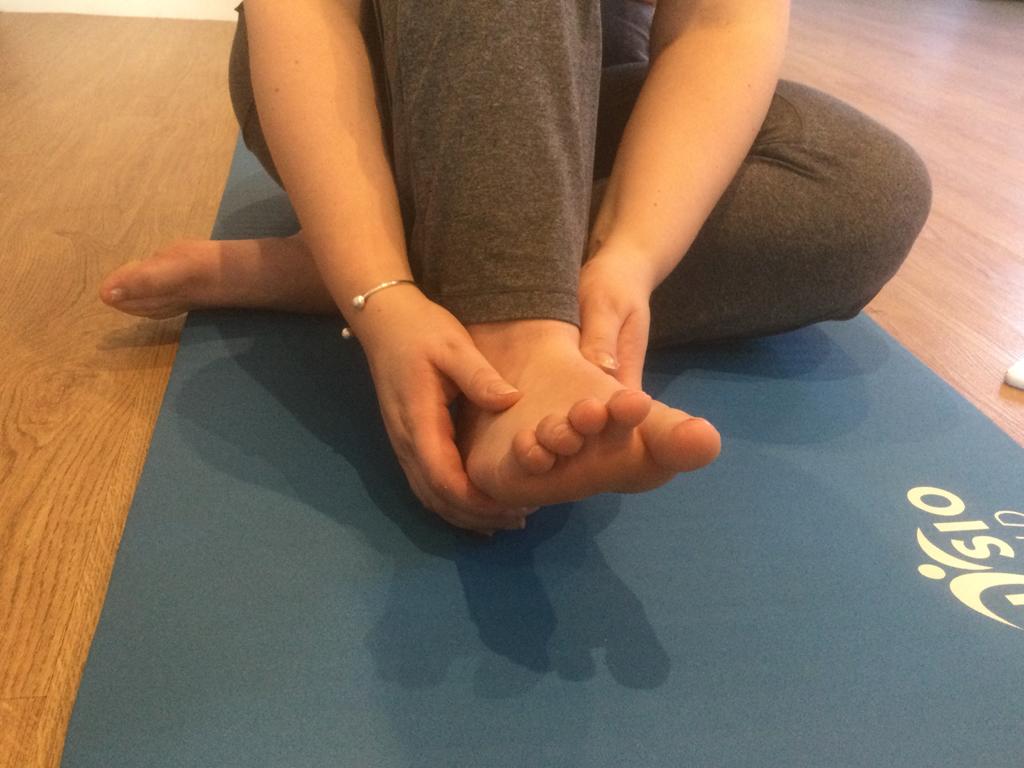
THE CAUSES OF PLANTAR FASCIITIS.
During lockdown, many people have been out running for their daily exercise. Some would have been running for years but for others it is a novel experience and with gyms being closed, running may have been their preferred or only option. In normal years, the longer days usually see an increase of injuries related to running especially with a glut of Marathons on the horizon, such as the London, Brighton and the Hastings half.
One injury which is frequently linked to an increase of training load or in those who have recently begun to run is Plantar Fasciitis. However this painful condition is not exclusively suffered by runners. It is considered to be one of the most common causes of heel pain, involving inflammation and sometimes micro-tears of the plantar fascia. As scars form in the process of repairing those micro-tears, the scar tissue attempts to mimic the skin/ muscle in how it was previously functioning. Due to the nature of scar tissue, which is inflexible, the newly formed scar cannot do this and intertwines both through the fascia and underneath the skin. These fascia connections can make the area feel tight and cause a restriction of movement thereby exacerbating the discomfort felt by the original injury.
WHAT IS FASCIA?
Fascia covers our entire body and is a moveable web that covers our muscles, our bones and is also present within our skin. It is the framework of our human shape.
WHAT DOES PLANTAR MEAN?
Plantar relates to the sole of the foot.
I AM NOT A RUNNER SO I CANT BE SUFFERING FROM PLANTAR FASCIITIS CAN I?
It is also very common in dancers, martial arts practices and those who repeatedly land on hard surfaces with little or no footwear. It is also prevalent in the overweight or in those whose shoes have inadequate support / excessive wear; shop workers, nurses and those who are on their feet all day are extremely prone to Plantar Fasciitis. (Active children can sometimes suffer especially if they are playing sport, which of course is currently on hold, whilst a growth spurt is ongoing).
All of the above have one thing in common: overuse injury linked to excessive stress on the plantar fascia. This can lead to tightness and shortening of the Gastrocnemius and Soleus muscles as well as the deep muscles in the calf that cause the toes to curl. The Gastrocnemius and Soleus form the Achilles Tendon, which inserts into your heel bone (Calcaneus) near the plantar fascia.
THE SYMPTOMS
* Plantar Fasciitis typically causes a stabbing pain in the sole of the foot close to the heel.
* Pain is frequently worse with the first few steps upon waking and in severe cases, the foot may be unable to support your body weight until the area has warmed up and been stretched.
* Pain can be triggered by long periods of standing or when rising from a prolonged time of sitting.
* Pain is often worse after exercise but eases a little during exercise (do not assume because it hurts less when exercising that the condition is getting better – it isn’t!)
* Pain is often felt when stretching the plantar fascia, along with tightness in the Gastrocnemius and Soleus muscles.
* Tightness or a weakness in the Tibialis Anterior muscle can be detected (the main muscle running down the shin into the foot).
* Biomechanical abnormalities may be present (see my last blog about memory foam trainers where gait analysis is addressed).
ASSESSING THE INJURY
There are several methods of identifying the presence of Plantar Fasciitis, apart from palpation (gently pressing the area to detect discomfort), gait analysis and postural analysis (Daniel can help you with this), the following “Windlass Test” can confirm your self diagnosis. The pre non-weight bearing test should be conducted first as the tests will progressively intensify sensitivity and ask a friend to help you – GENTLY!
* Non-weight bearing “Windlass Test”
Sit on the floor or firm bed with the knees bent to 90 degrees, with toes pointing up towards the shins. If this reproduces the heel pain there is no need to progress to partner assistance as you have a positive response to the pre-test.
Your partner gently stabilises the ankle and behind the big toe. Very carefully and slowly allow your partner to press the big toe up towards the top surface of your foot. The test is positive if pain is felt towards the end range of the assisted movement.
*Weight-bearing “Windlass Test”.
It there is a negative response to the non- weight bearing test, then the weight bearing test can be attempted with your partner. However, be warned that weight bearing further increases sensitivity to the test so GO CAREFULLY!
Stand on a step or box, so that your big toe clears and overhangs the edge and ensure your body weight is distributed equally between both feet. Your partner should then repeat the test as before by gently pressing the big toe up towards the ceiling.
TREATING PLANTAR FASCIITIS
Sports or Deep Tissue massage can be very effective in reducing tension in the Plantar Fascia and the muscles associated with the condition in the foot and lower leg and of course is highly recommended. However, in the current lockdown situation, an appointment with our therapist, Wendy, is not an option. So in the meantime, what can be done?
* Rest and active rest.
Taking a break from sporting activities or exercise will give the condition time to begin the repair and healing process. However, those who are active tend to find rest almost impossible so active rest is advised. Switch to activity that involves as little lower leg activity as possible or at the bare minimum, significantly reduce the training activity and impact. Patience is required as returning to activity too soon may cause the condition to significantly worsen, even if initially it appears to be less painful.
* Self treatment.
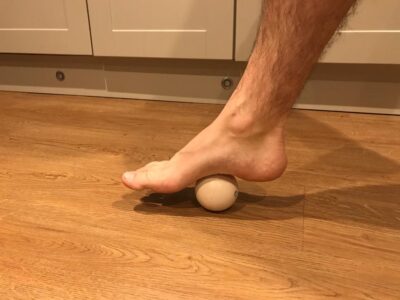
Whether clinics are open or not for massage, maximising the benefit of your rest / massage therapy by using a ball to reduce the tension under the foot whilst maintaining mobility is an essential part of the rehabilitation process. If you have a “myofascial release ball” that is ideal, however the majority of people will not have one to hand so a tennis ball is a suitable option.
Ball Rolling
Don’t have a ball?
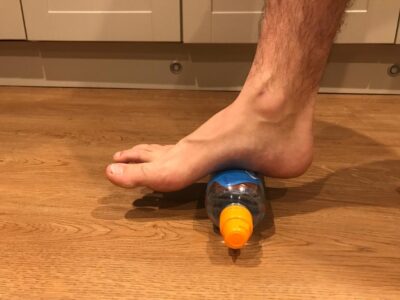
Roll the ball around the entire arch in a circular motion, from the ball of the foot through to the pad of the heel. If this is too intense then fill a plastic bottle with very cold water or ice can be used instead to help roll out the foot.
* Stretches.
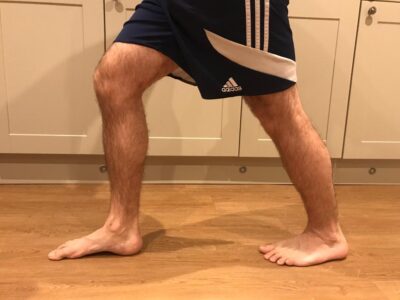
As Plantar Fasciitis can be linked to flexibility problems in the lower leg which thereby reduces potential range of motion in the foot, as previously described, stretching is essential to the rehabilitation process. The stretches shown below will assist in maintaining muscle function and reduce tension in the lower leg muscles by gently increasing their length and should ideally be undertaken at least once a day, twice if possible, to assist muscle memory and movement quality. Each of the calf stretches as shown below should be held for a minimum of 20 seconds on both legs, returning to the affected side for a further 20 seconds for both stretches.
Gastrocnemius Stretch
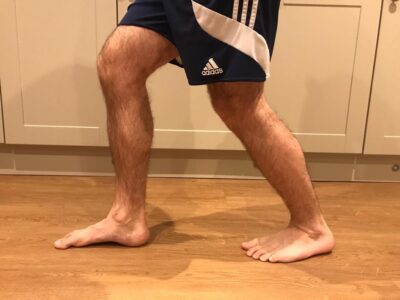
Soleus Stretch
The Tibialis Anterior and Plantar Fascia stretches ideally need to be built up to a minutes duration, the latter being the most difficult and uncomfortable to hold for any length of time. Try the stretch with the weight distributed between the hands and feet, which is much easier, before sitting back towards the heels. The further your body weight shifts back onto the feet, the more intense the stretch. Perseverance is key with this one and is crucial before attempts can be considered for a return to training, slowly increasing your activity to previous levels, which were of course, the cause of your Plantar Fasciitis in the first place!
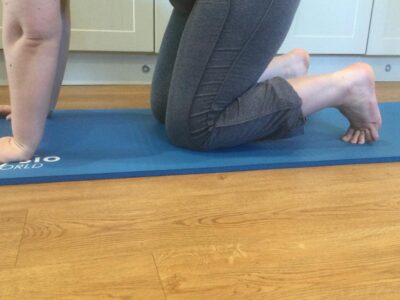
Plantar stretch
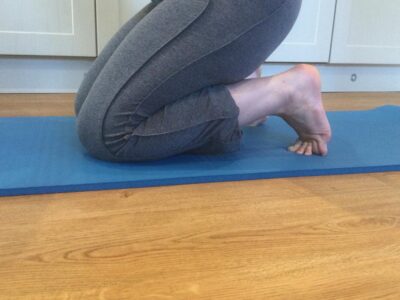
Plantar Progression Stretch
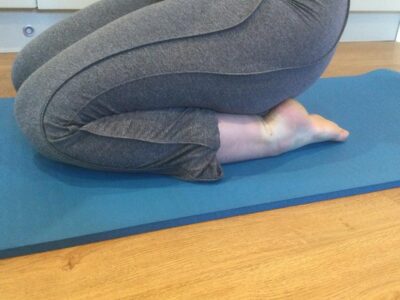
Tibialis Anterior Stretch
HELP AND ADVICE
As always, Weald Fit and Therapy are here to help; whether it is with a sensible, achievable yet progressive training programme from our Personal Trainer Daniel James, or further rehabilitation advice from our Massage Therapist Wendy.
With our expert knowledge and guidance, we can assist in getting you BACK ON YOUR FEET AGAIN!
